
Trading Course: Systematizing a Trade
How to prep and succeed every (most) day

Image 1. The cosmos of unknowns. Luke Skywalker play cosmic chance
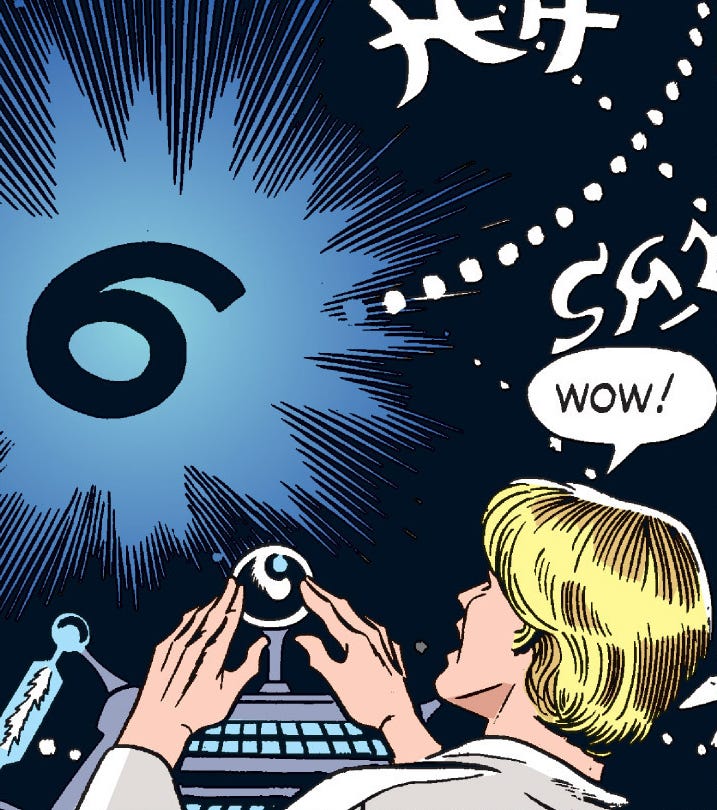
The basis of trading is chance. No one ‘knows’ anything except an insider trader. That is the nature of the universe as well, as there is no perfection or conclusion: there is always another possibility just over the horizon. The only perfection is mathematics, perhaps, and expression of variation and continuity is itself imperfection.
So as traders we must leave our comfort zone of a 9am to 5pm work shift with pre-determined pay, benefits (if you’re lucky), and embrace a cosmic jungle of sorts. Yes that all may sound scary and you can easily lose the house, the spouse, and the dog in the process - but with a system in place these unknown complexities becomes navigable. And you may get to keep the dog.
And with enough experience and discipline - you too can be profitable.
Part of our job is to reduce complexities as much as possible. It is no mystery why a dozen indicators all at once most often lead to confusion; one may not be ready yet, four don’t line up, two I don’t even understand but the smart guy uses them, the rest are on all different timeframes except for the last which is showing contra to all the others!
Help…
This journal entry is a sample of how I work. How I select levels and setups, gauge context, and manage risk. That’s all you need aside from screen time, and the implementation of these elements will make you a successful trader. I will go into more detail on each one of these in future lessons but for now this is a quick handbook on getting started.
Trading Process
1. Levels
Trade levels I wrote ahead of open. First of all, how did I establish these levels of interest? There are many ways to do this - support, resistance - I typically however use structural analysis.
Image 2. Thursday January 1 premarket plan levels

So where did these come from? I watch the tape each day for clues from the order flow (positions, sizing), and confluence with structural level (POC, VAH/L, LVN, etc) works best. Without any info aside from the image, can you pick out levels of interest?
Image 3. Wednesday RTH and ETH levels of interest
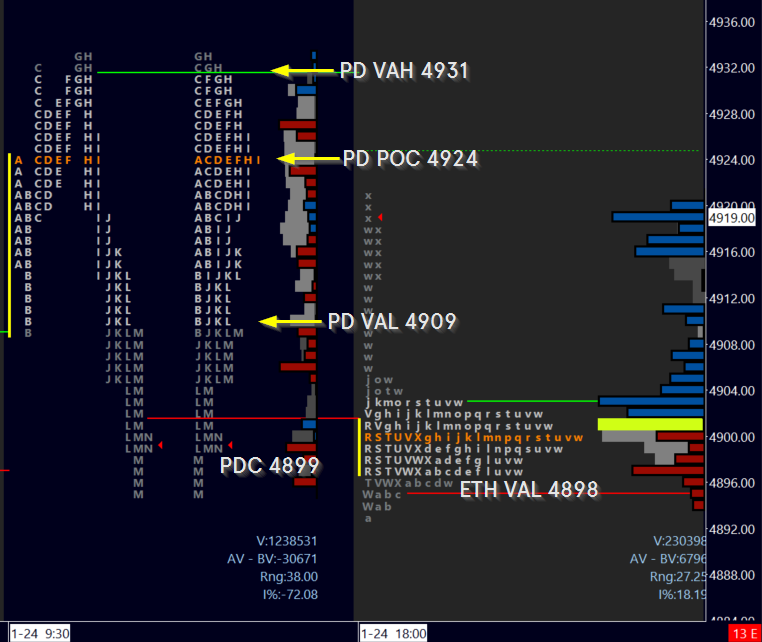
These are some I chose. I may leave out ETH VAH or PDC because of other factors or overlap. In this case I wanted the best possible prices for a short or long, so I favored the extremes. Also some of the were in the middle of PD M period - nasty!
2. Day Type
It is said that the trader who can establish the day type within a few minutes of open has beat 95% of all other traders. This is largely true I have found out. There is no shortcut for screen time / experience, but a great place to get started is a classic textbook, for example.
Image 4. Mind Over Markets, J. Dalton 1999

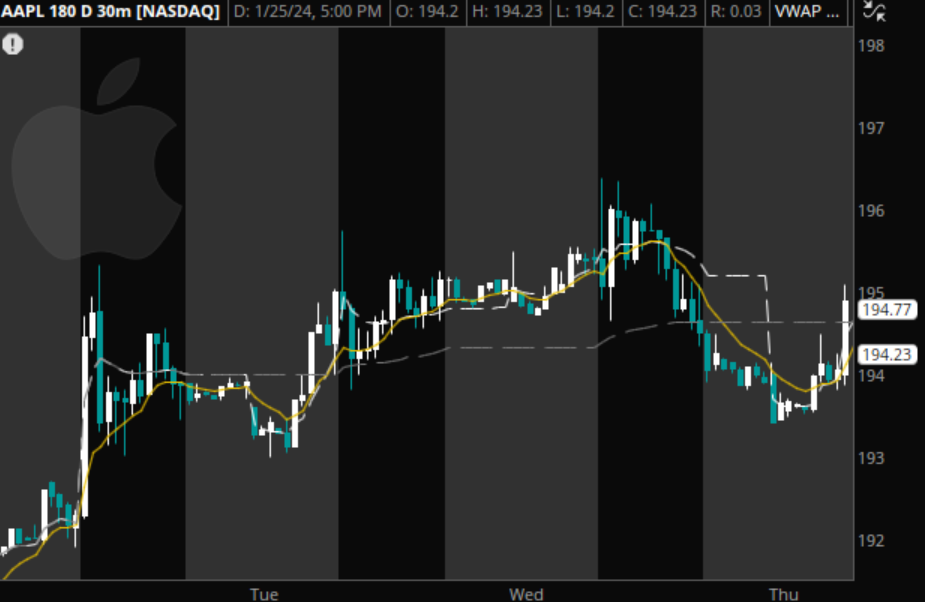
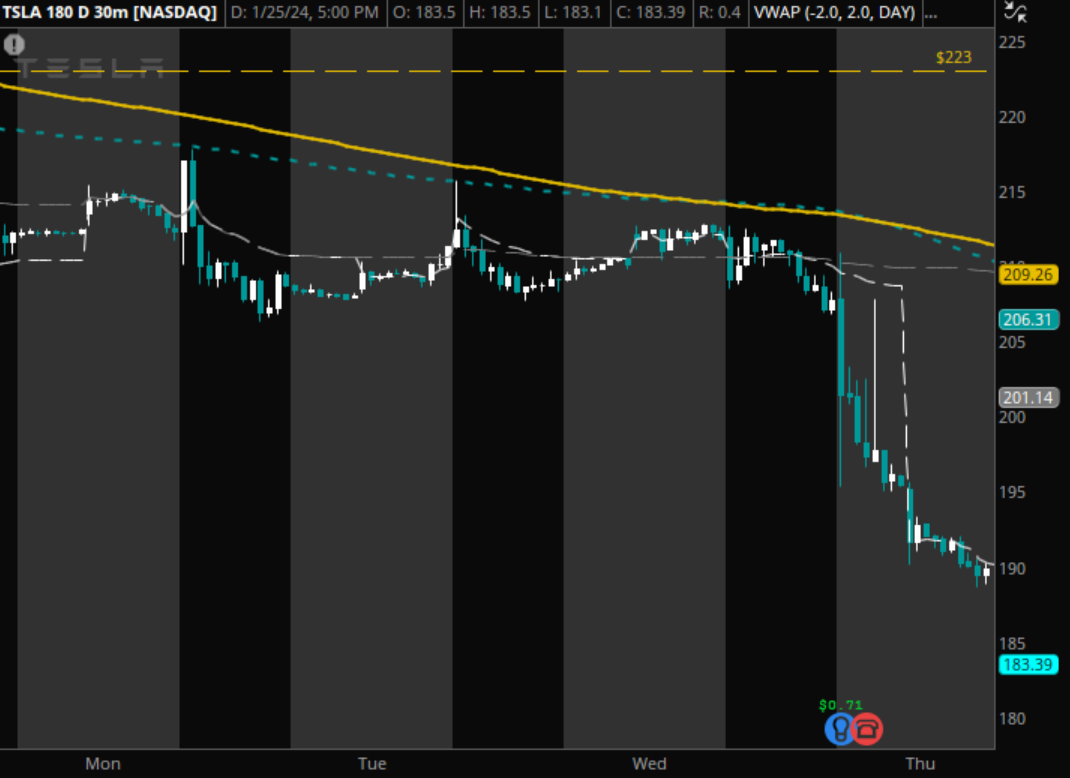
In the case of Thursday’s session, I was expecting balance going into the session. Why? Most days aren’t trend days (more stats later!). My thesis from the plan was balance due to earlier presence of sellers, a quiet ETH session, weak TSLA earnings, and an indecisive close at 4900.
Image 5. AAPL and TSLA 30m bar charts
3. Stats
It is important to journal ideas, trades, and keep stats. Do I often enter early? Late? Are my ideas even working? How long should I stay in a trade? All these can usually be answered with good metrics only you can keep.
For example I know that for ES, my premarket levels give good results. My actual results vary, but ideally I can achieve high R:R, a median risk of 3.5 points (on which I use 3SD stop), and best entries in the first two hours of RTH. At least I know what I’m dealing with.
Image 6. Average stats based on ES plans
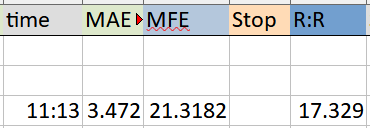
4. Entry / Setup
While I often have limit orders on some levels, I prefer context be my ultimate guide. I pull orders when conditions aren’t quite right, or add to positions on a strong setup. I publish setups on my feed; here is an example from today, late day fade (LDF).
Image 7. Analysis of Thursday lows
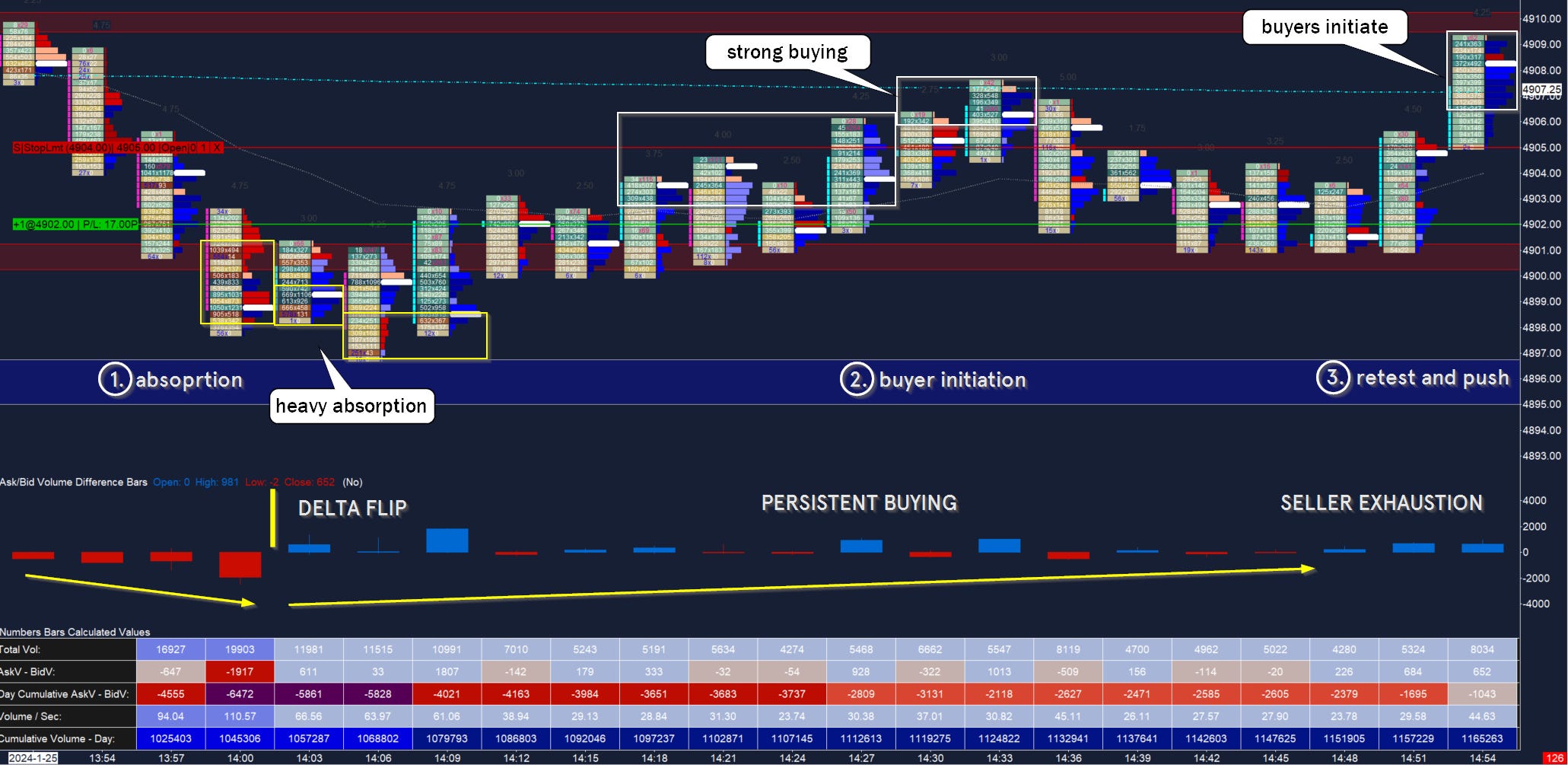
The key is to look for patterns and signals you can interpret with reasonable accuracy and execute with consistency. Your setups are your own, but adapting what others were doing before you is a great place to start.
5. Profits and Stops
This is entirely discretionary. Some authors allow a stop out even after a trade is far in their favor, holding out for a high R:R. Others opt for a high win rate and lower R:R. The key is to find your expectancy ratio by logging your trades.
With regards to taking profits, I trade level to level, for example a test of IB, the open, PDH/L, or higher timeframe levels. There is no one rule for stops but I typically will track prior lows/highs until they break or my levels are satisfied.
Image 8. Thursday potential profit targets and stop trailing
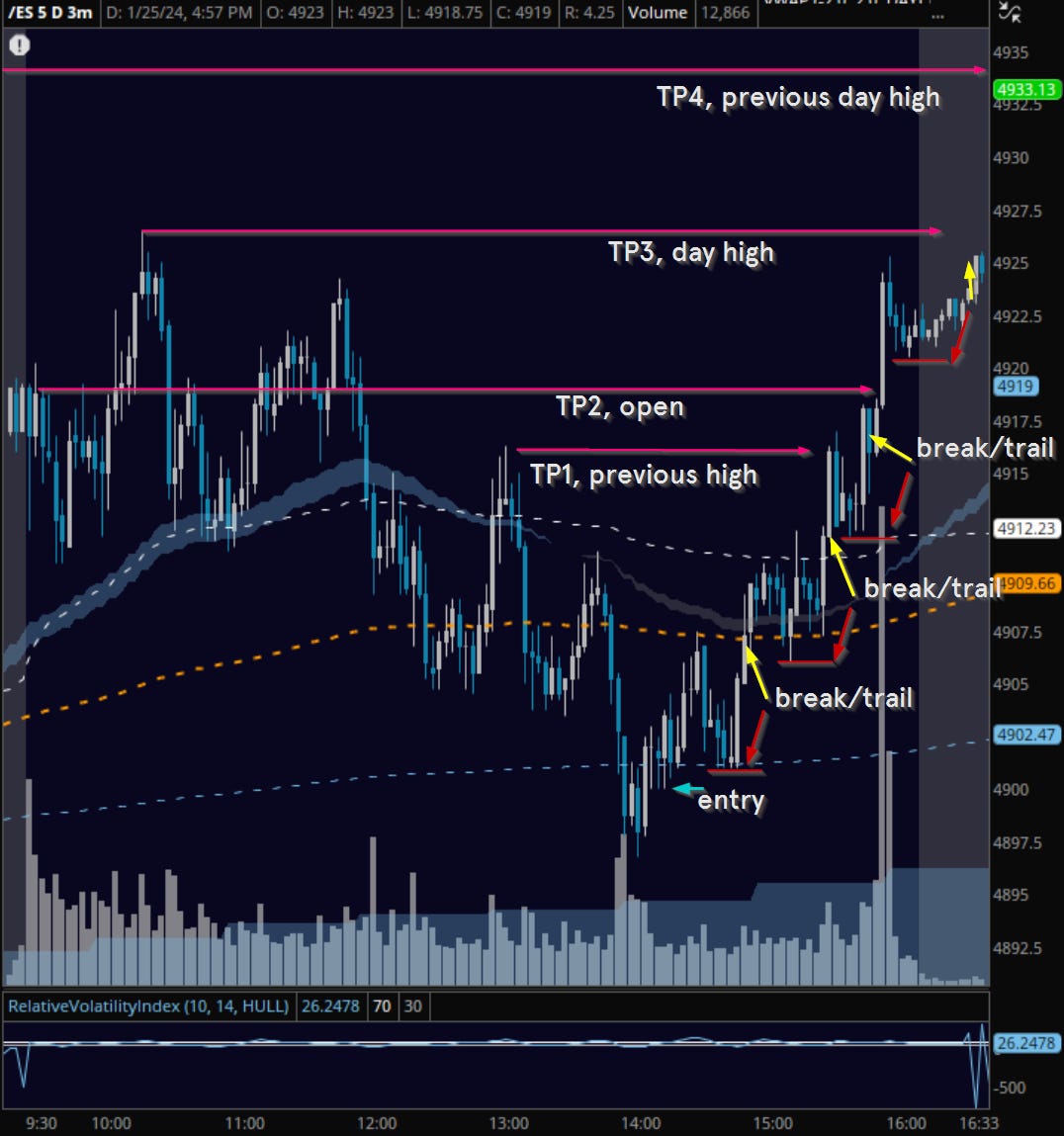
In the future I will unpack a lot of these concepts and add new ones. However I hope this was helpful in describing how I (and you) can systematize trading, which is the key to success. Plan your trades ahead and respect your stops!
That’s it for now, the market is always open tomorrow.
Tip jar - support my continued work!

Your support and comments are appreciated. I do my best to respond to everyone in a timely way. Be sure to follow me @rareverend on X (Twitter) for the latest updates!
Don’t maintain bias in the face of contradicting information! Capital preservation is key.
Somehow I missed this post. Going through this knowledge session now. thanks a lot!