
AVWAP Course: Crossover Concepts Lesson V
January 24, S&P500 (ES)
Each week I review key moments from recent price action in the indices. These instances will be analyzed using three methods: the tape / DOM; footprint; and candle chart. Synthesizing the three allows an understanding greater than the sum of its parts, leading to a complete understanding of the auction process. While there are many great resources out there, I am not aware of any that provide such a comprehensive study guide.
This lesson is part of a longer series using the anchored volume-weighted average price (AVWAP). Most trading platforms have this feature. It does not make a difference what timeframe or chart type as volume and price are independent of time. The following lesson will share some helpful strategies for using the AVWAP to identify potential entries (and exits).
AVWAP Dynamics
Prior lessons have explored the art of identifying and using anchor points. This lesson will focus on understanding the dynamics revealed with the AVWAP: underwater and above-water traders.
This part of the course will expand on the theory of the AVWAP. It is not only a tool for entry or exit locations - it is primarily a means to understand who is in control around a given price.
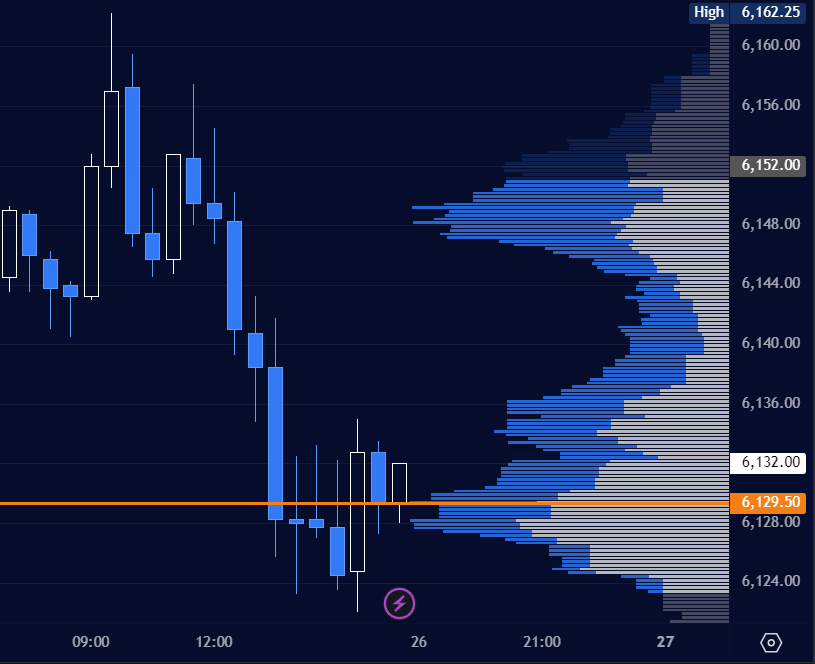
Through this lesson, I highly suggest you keep the 30m timeframe in mind. Don’t overlook the significance of the market profile either. Refer back to image below regularly as you read the note.
Image 1. January 24, ES 30m chart
AVWAP Shifts
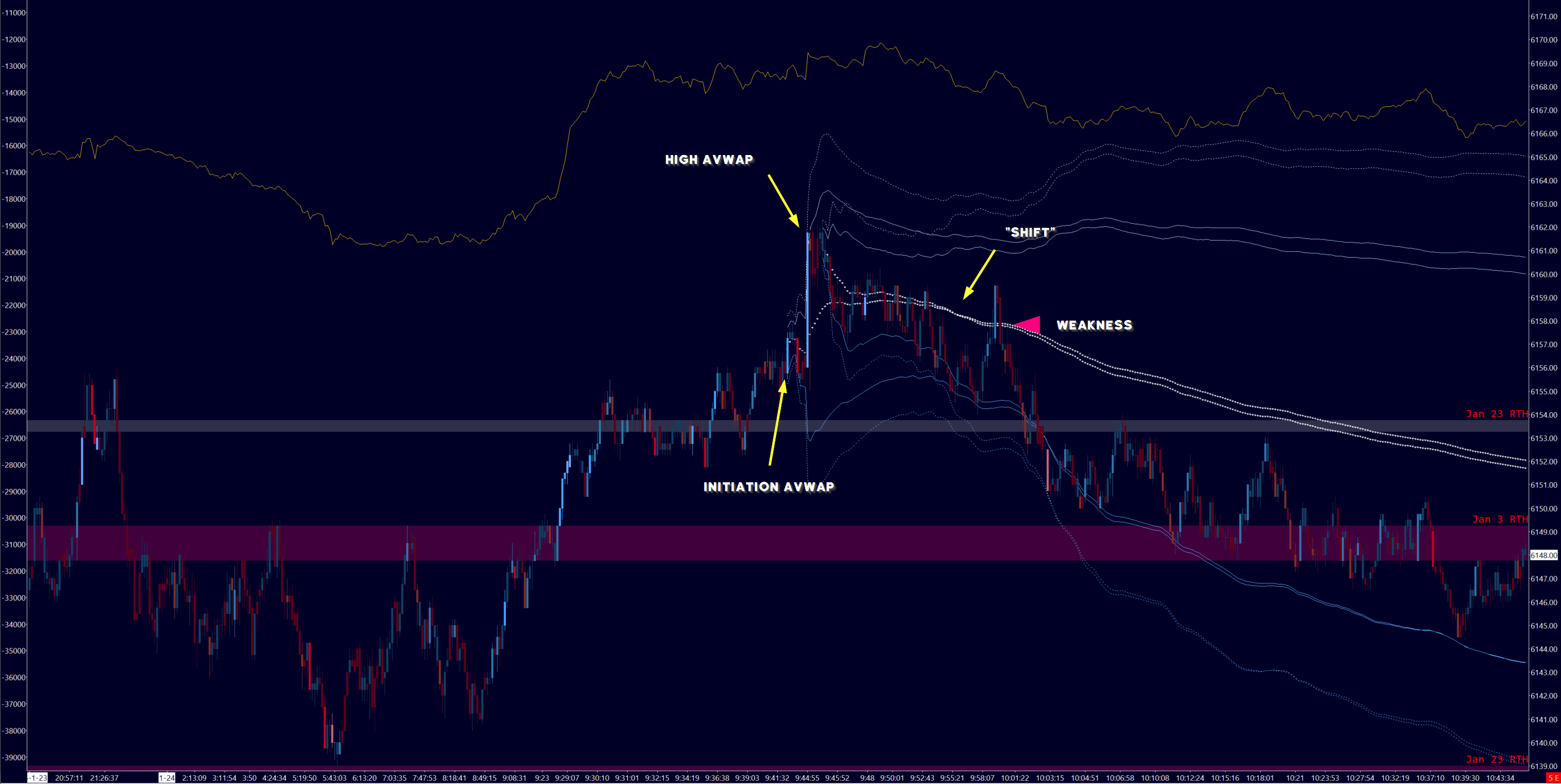
Image 2. AVWAPs anchored to early initiation and IB high
We have already introduced the idea of different timeframe traders represented by AVWAPs.
In the chart above, two anchor points are straightforward - one at early initiation and another at the highs, once a lower high is identified. The AVWAPs now track two sets of traders - both evidently excited by the new ATH. The second AVWAP at the high represents the trappiest of longs (worse possible price) if a new high is not made.
The crossover in the AVWAPs occurs when the average of the sum of trades is at a worse price than the trapped longs at the highs. It may seem counter-intuitive, until you consider the volume that took place at higher prices after the first anchor point - once price falls below that average more aggressively than a later average.
This is certainly an ‘uh-oh’ moment.
In effect, the ‘later’ traders represented by the AVWAP at the highs now act as a buffer to the first set. In this example, they will be likely to exit once an underwater position returns to their original price. That leaves so-called early guys frustrated and even worse off.
Think of it this way - reclaiming the ‘insulated’ AVWAP on an hourly close would mean both sets of traders are back in black - and dominance of the tape is shifting to their favor.
Image 3. AC/DC Back in Black 1980-81 tour

Zooming in on this area below, we are now looking for a reclaim and a close past the area of shift. Per my stats, the changeover around B period (10h00EST) is the median turnaround time for price in RTH.
Image 4. Buyers where art thou
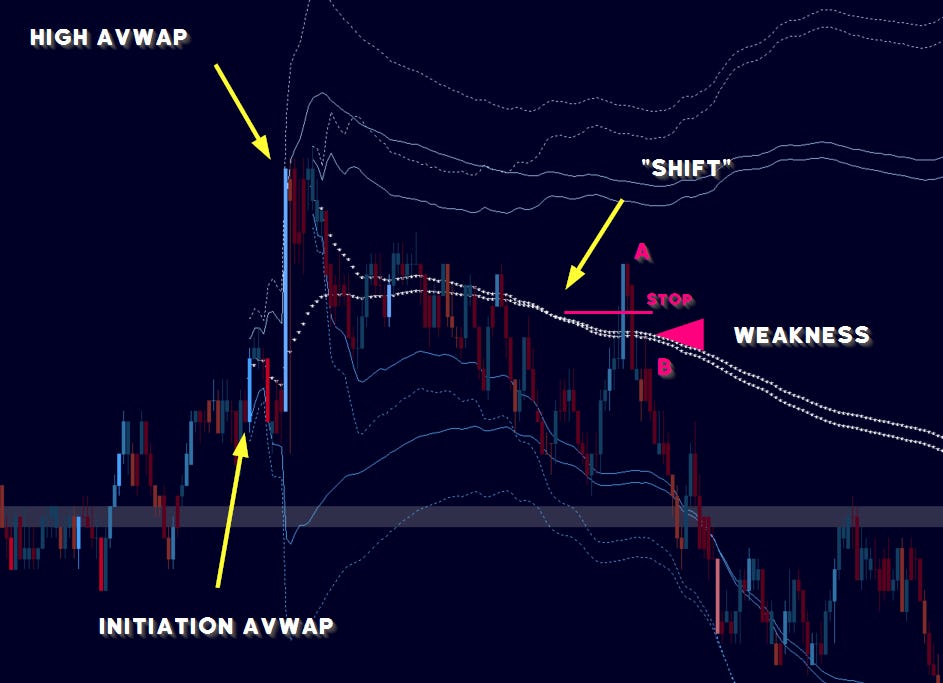
However, the attempt [A] to reclaim average session price into new highs is quickly rejected. This is nothing but a liquidity grab / positioning by sellers. In itself it doesn’t mean anything for the rest of the session, but it shows the weak position of longs.
A second attempt [B] into the AVWAP could be entered short, for tight risk against the spike high. In fact, I used the crossover price as a stop - even better!
Let’s look at a few more conceptual examples. The next one is great, especially for traders who are just starting out learning price action, more cautious, or on a higher timeframe.
In fact, I’ll crow it here: this trade below is probably your ideal entry for a swing short.