
Auction Course: Trading a Reversal
May 30, S&P500 (ES)
Each week I review key moments from recent price action in the indices. These instances will be analyzed using three methods: the tape / DOM; footprint; and candle chart. Synthesizing the three allows an understanding greater than the sum of its parts, leading to a complete understanding of the auction process. While there are many great resources out there, I am not aware of any that provide such a comprehensive study guide.
Image 1. It’s really that dumb.
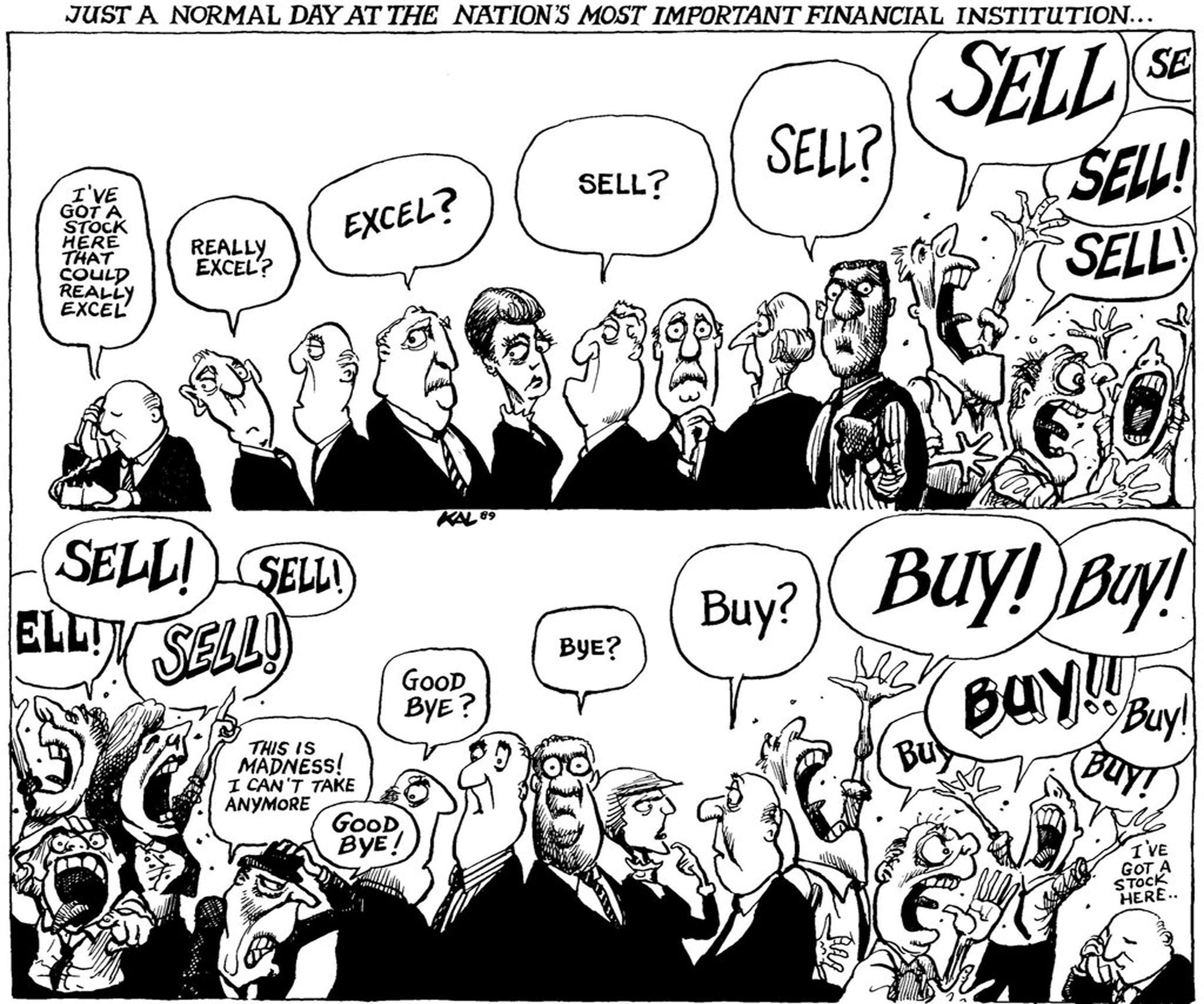
Components of an Auction?
This will be a short lesson to introduce a key components of auctions: price, volume, and time. In earlier series we explored the three primary concepts in the price action: absorption, exhaustion, and counter-initiation. How do these interrelate?
I had a number of followers express frustration with the price action this week, especially on Friday. We will take a comprehensive look at the turnaround mid-day further below, with an eye to simplifying the concepts. After all, knowledge is the retention of a large database of information, wisdom is the capacity to simplify and act on it.
In this lesson I will identify the key information present in Friday’s auction that gave major hints that the initial sell was coming to a close.
The market is a flood of information, successful traders are able to distill simple clues that lead to actionable trades. That is our goal with these lessons - to present information but distill patterns with typical (albeit not certain!) outcomes. You are only increasing your odds, not chasing a certainty.
This huge amount of data is ultimately a derivative of only price and volume. That’s all. Everyone knows price - it’s what novice traders first experience and react to, more often than not in ways detrimental to trading outcomes.
A more sophisticated trader may begin to incorporate volume in their analysis. Dwindling volume at highs or lows may suggest waning interest: a market setting up in search of more liquidity. High spikes in volume could also mean exhaustion and a likely turnaround. Higher volume and slowing price action may also indicate that a move has encountered resistance and may be time for a pullback.
However everything ultimately rests on time, the ‘regulator’ of markets. What could that mean? We somehow perceive time as more elusive a concept (for trading) despite being the least arbitrary: a minute is a minute. And that’s precisely why it’s a regulator! The amount of time spent at a price and the way in which prices moves (the auction) are often the most reliable indicators of the next direction. It may depart from its usual rhythms, which could suggest an incoming move.
Price action is also very unique to individual products, which can take years to fully appreciate - even if only for one ticker. As I have said before, there is no shortcut to teach this component outside of years of watching the tape and the screens.
But we can help speed up the process.
For example, Friday’s low gave three clear clues to a turnaround in the form of a strong rebid. We explore each of them - and an A+ trade setup - in the following section.